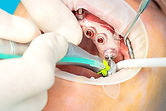
Complete tooth loss affects more than appearance – the jaws and oral function also change over time
Teeth contribute to chewing, speech and support of the lips and cheeks. The periodontal ligament of natural teeth transmits functional forces to the surrounding alveolar bone.
When all teeth are lost because of caries, periodontitis, trauma or other causes, the alveolar ridges remodel because they no longer support teeth. This remodelling begins after extraction and continues over time, although the rate and pattern vary greatly between individuals.
For patients in Basel, the practical effects may include reduced chewing efficiency, changes in speech, altered facial support and increasing difficulty retaining a conventional denture. Treatment can often improve function and stability, but lost anatomy cannot always be fully recreated.
Five important changes in an edentulous jaw
1. Alveolar ridge resorption – the jaw ridge becomes smaller
The largest dimensional changes generally occur during the first year after extraction, followed by slower continuing remodelling. The exact amount varies substantially and should not be reduced to one fixed percentage for every patient.
The residual ridge may become:
flatter
narrower
less favourable for conventional denture retention
more challenging for later implant placement
The pattern differs between the maxilla and mandible; sinus expansion in the posterior maxilla and proximity to nerves in the mandible can influence later implant planning.


With long-standing edentulism, the residual ridge may differ considerably from its original shape.
2. Changes in chewing and muscle function
Without natural teeth, the chewing system and facial musculature adapt to a different mechanical situation:
chewing efficiency is generally reduced compared with a complete natural dentition
patients may use lower bite forces with conventional complete dentures
food selection and chewing strategy may change
speech can be affected, particularly during adaptation to a new denture
Patients may report:
fatigue or difficulty with tougher foods
avoidance of certain foods
less confidence when speaking or laughing
3. Changes in facial and lip support
Complete tooth loss can change facial support and profile, particularly when substantial ridge resorption is present:
lip support may decrease
the cheeks may appear less supported
the lower facial height may appear reduced when the denture or jaw relationship is inadequate
the chin can appear more prominent
jaw relationships may look more pronounced as the ridges resorb
perioral lines and folds may become more visible when lip and cheek support is reduced

These changes reflect a combination of ageing, soft-tissue changes and loss of dental and skeletal support rather than tooth loss alone.
4. Conventional denture retention may become more difficult
As the ridge resorbs, a complete denture may lose:
retention in the upper jaw
stability in the lower jaw
control during chewing
Common practical problems include:
movement of the denture during speech or eating
pressure areas or sore spots
reduced confidence in daily activities
avoiding social situations because of denture insecurity
5. Nutrition, function and quality of life
Complete tooth loss can influence general wellbeing indirectly through:
changes in food choice and chewing ability
difficulty eating some fibre-rich or firm foods
reduced oral-health-related quality of life
social effects when eating or speaking becomes difficult. Associations between oral function and frailty have been reported in older adults, but tooth loss should not be presented as a direct single cause of falls or balance disorders.
Frequently asked questions
Can lost jaw bone be rebuilt?
Sometimes. Bone augmentation can increase local volume for selected implant treatments, but the extent and predictability depend on anatomy, defect size, medical factors and the treatment goal.
Is a complete denture a long-term solution?
It can be a suitable long-term treatment for many patients, but retention and chewing efficiency are limited by anatomy and ongoing ridge remodelling. Relining, adjustment or replacement may be required over time.
Should implants be placed immediately after tooth loss?
Not automatically. Timing depends on infection, bone and soft-tissue conditions, healing, systemic health and the planned prosthesis. Early implant treatment may preserve options in selected cases, but immediate placement does not completely prevent normal post-extraction bone remodelling.
Restoring stability and function in Basel
Complete tooth loss changes oral function, ridge anatomy and facial support, but modern removable and implant-assisted prosthetic concepts can substantially improve stability and quality of life for appropriately selected patients.
If you have lost most or all teeth, we can assess the remaining bone, soft tissues, jaw relationship, expectations and medical factors in Basel and explain the advantages and limitations of conventional dentures, implant overdentures and fixed implant-supported solutions.