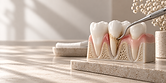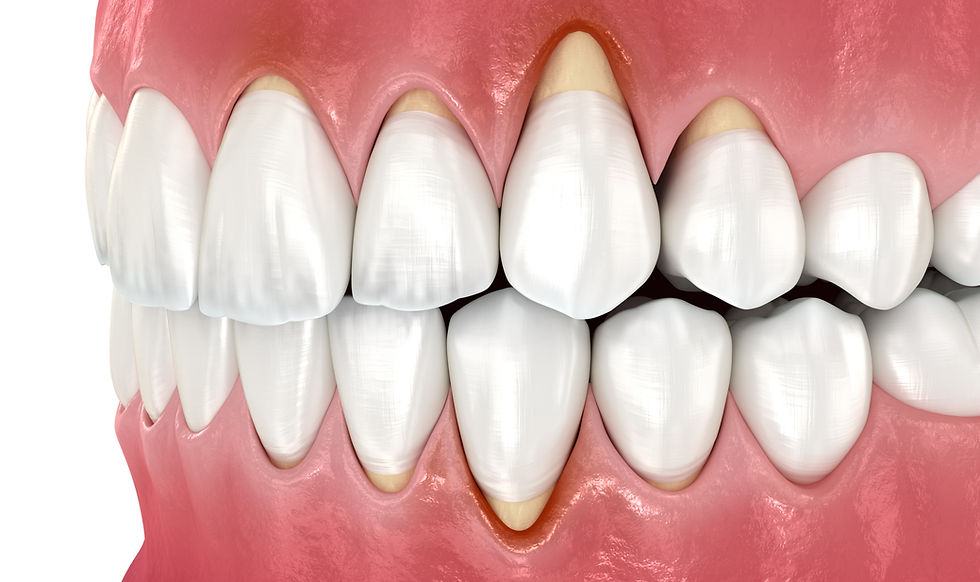
Parodontitis – umgangssprachlich „Parodontose“ genannt – ist eine chronische Entzündung des Zahnhalteapparates. Sie betrifft Zahnfleisch, Fasern und insbesondere den Kieferknochen, der die Zähne trägt. Unbehandelt führt sie zu Zahnfleischrückgang, Zahnlockerung und schließlich Zahnverlust.
Parodontitis ist eine der weltweit häufigsten chronischen Erkrankungen. Sie entsteht schleichend, meist ohne Schmerzen, und wird deshalb oft erst spät erkannt – obwohl frühzeitige Behandlung entscheidend für die langfristige Zahnerhaltung ist.
Was verursacht Parodontitis?
Parodontitis entsteht durch ein komplexes Zusammenspiel aus:
1. Bakteriellem Biofilm (Plaque)
Eine unkontrollierte bakterielle Besiedelung löst eine entzündliche Reaktion des Körpers aus.
2. Überreaktion des Immunsystems
Der Körper reagiert auf die Bakterien – diese immunologische Antwort führt letztlich zum Knochenabbau.
3. Individuellen Risikofaktoren
unzureichende Mundhygiene
genetische Prädisposition
Rauchen (stärkster externer Risikofaktor)
Diabetes mellitus
Stress
hormonelle Faktoren
Mundatmung / trockene Schleimhäute
Wie äußert sich Parodontitis?
Parodontitis beginnt meist mit einer Gingivitis (Zahnfleischentzündung).Warnsignale:
Zahnfleischbluten
Rötung, Schwellung
Mundgeruch
„längere“ Zähne (Zahnfleischrückgang)
empfindliche Zahnhälse
Zahnlockerung oder Wanderung
Abszesse / wiederkehrende Schwellungen
In vielen Fällen jedoch: lange Zeit keine Schmerzen, trotz fortschreitendem Schaden.
Was passiert im Verlauf der Erkrankung?
Bakterien dringen in den Zahnfleischrand ein
Körper reagiert mit Entzündung
Der Zahnhalteapparat wird zerstört
Kieferknochen baut sich ab
Zähne verlieren Halt und lockern sich
Unbehandelt: Zahnverlust
Parodontitis ist chronisch, aber behandelbar – und ihr Fortschreiten lässt sich stoppen.
Wie wird Parodontitis diagnostiziert?
In unserer Praxis erfolgt eine systematische Untersuchung:
Messung der Sondierungstiefen
Analyse von Blutungsneigung (BOP)
Prüfung von Lockerungsgrad
Röntgenanalyse (Knochenabbaumuster)
Untersuchung der anatomischen Verhältnisse
Risikoprofil nach modernen Leitlinien
Moderne Parodontitis-Therapie
Die Behandlung folgt einem strukturierten, evidenzbasierten Konzept:
1. Antiinfektiöse Therapie (Cause-Related Therapy)
Entfernung aller bakteriellen Beläge
Tiefenreinigung unterhalb des Zahnfleischsaumes (subgingival)
Optimierung der Mundhygiene
Aufklärung über Risikofaktoren (z. B. Rauchen)
2. Reevaluation
Nach 6–12 Wochen wird geprüft, ob die Entzündung abgeklungen ist und wie sich die Sondierungstiefen verändert haben.
3. Chirurgische Therapie (falls notwendig)
Bei tiefen, komplexen Defekten kann nötig sein:
Zugangschirurgie
regenerative Maßnahmen (Schmelzmatrixprotein, Membranen, Knochenersatzmaterial)
Korrektur von Taschen, anatomischen Nischen und Defekten
4. Langzeitstabilisierung (Unterstützende Parodontaltherapie)
Entscheidend für den Erfolg:
Recall alle 3–6 Monate
Kontrolle der häuslichen Mundhygiene
professionelle Reinigung
Risikomanagement (Diabetes, Rauchen, Stress)
Ohne diese Phase müsste die Erkrankung als nicht erfolgreich behandelt gelten.
Wissenschaftlich belegte Fakten zur Parodontitis
Die zentralen Mechanismen der Parodontitis sind gut erforscht:
Parodontitis wird durch einen dysbiotischen Biofilm in Kombination mit einer übersteigerten Immunantwort verursacht. Hajishengallis et al. zeigen, dass nicht die Bakterien allein, sondern eine fehlregulierte Wirtsantwort den Knochenabbau antreibt.¹
Rauchen erhöht das Risiko einer Parodontitis um das 2- bis 7-fache, verschlechtert die Durchblutung des Gewebes und reduziert die Heilungschancen nach Therapie.²
Diabetes mellitus ist streng mit Parodontitis verknüpft: Schlechter eingestellter Blutzucker potenziert den Knochenabbau und erschwert die Behandlung.³
Studien belegen, dass regelmäßige unterstützende Parodontaltherapie (SPT) die wichtigste Maßnahme zur Verhinderung von Zahnverlust ist. Patienten ohne SPT verlieren signifikant häufiger Zähne – unabhängig davon, wie gut die initiale Therapie war.⁴
Regenerative Maßnahmen wie Schmelzmatrixproteine (EMD) oder membrangestützte Knochenregeneration zeigen nachweislich bessere Wiederherstellung von parodontalen Defekten als reine Reinigungstechniken.⁵
Häufige Fragen (FAQ) zur Parodontitis
Ist Parodontitis heilbar?
Die Erkrankung ist chronisch – aber wir können sie stoppen und stabilisieren. Entscheidend ist regelmäßige Nachsorge.
Warum blutet mein Zahnfleisch?
Zahnfleischbluten ist eines der frühesten Zeichen einer Entzündung und sollte niemals ignoriert werden.
Muss Parodontitis weh tun?
Nein. Sie verläuft meist schmerzlos, bis weit fortgeschrittene Schäden auftreten.
Kann Parodontitis Herz- oder Allgemeinerkrankungen beeinflussen?
Ja. Es gibt klare Zusammenhänge zwischen Parodontitis und Herz-Kreislauf-Erkrankungen, Diabetes, Frühgeburten und systemischen Entzündungen.
Kann Zahnfleisch wieder nachwachsen?
Entzündung kann gestoppt werden – verloren gegangenes Gewebe lässt sich jedoch nur teilweise regenerieren (je nach Defektform).
Quellen
Hajishengallis G. Periodontitis: from microbial immune subversion to systemic inflammation. Nat Rev Immunol. 2012. PMID: 22193206.
Bergström J. Tobacco smoking and risk for periodontal disease. J Clin Periodontol. 2003. PMID: 12834507.
Löe H. Periodontal disease: the sixth complication of diabetes mellitus. Diabetes Care. 1993. PMID: 8372688.
Axelsson P, Lindhe J. The significance of maintenance care in the treatment of periodontal disease. J Clin Periodontol. 1981. PMID: 6947991.
Sculean A et al. Regenerative periodontal therapy with enamel matrix derivative. Periodontol 2000. 2015. PMID: 25867980.